
How we create lasting change in a rapidly transforming world
In 2025, our programs expanded, going deeper and reaching further than expected. They influenced public systems, attracted new partners, and positively impacted 13 million people – a 30% increase in just one year. We have clear indications of lasting change through teacher‑training frameworks, national platforms, and service delivery models, that help to make support more accessible and more consistent. We design our programs on three connected pillars:
People: Supporting individuals to build the futures they want, with approaches that strengthen their wellbeing and open up opportunities.
Partnerships*: Working with committed organizations who help us scale proven solutions and ensure support reaches local communities.
Systems change: Improving the policies, practices, and structures that determine whether support reaches people when and where it’s needed.
Our results show that these three pillars form strong foundations which can support impact at scale. As we move into 2026 and 2027, we aim to double down on what works and prepare for another major step change in the 2028-2031 strategic cycle. With strong programs, system-level change, and a growing network of partners*, we are set to support millions more people through scalable, sustainable progress.
Z Zurich Foundation works with charities, non‑profits, service providers, philanthropic investors and other organizations. References to “partners” or “partnerships” are used in a general, philanthropic context only and do not imply a legal partnership.
Where impact begins and grows – with people
Impact is often expressed in numbers, and those numbers matter. They show scale, progress, and reach. Their full meaning emerges when they are also connected to human stories, when we see how an opportunity changes a life, and how that change ripples outward.
The stories that follow focus on people and their communities, that is where impact begins and where it lasts. Each action builds on another, growing from one person to a family, from a neighbourhood to potentially an entire country. These stories show how commitment at an individual level can travel far‑strengthening communities, influencing systems, and reshaping what we thought was possible.
Helping children prepare for the unexpected
If you had only minutes to prepare for a climate emergency, what would you take with you? In Valencia, Spain, students explore that question through the My Pillowcase program, adapted and led by Cruz Roja Española.
For primary school students, the answer begins with something simple: a pillowcase filled with everyday essentials they might need during a flood or heatwave.
But the learning doesn’t stop there. Through discussion, practice, and reflection on real events, children begin to understand risk not as something distant, but as something they can prepare for.
Over time, that preparation turns into action. Students practice first aid, track weather alerts, and help create shaded “Cool Spots” in their neighbourhood's to offer relief during extreme heat.
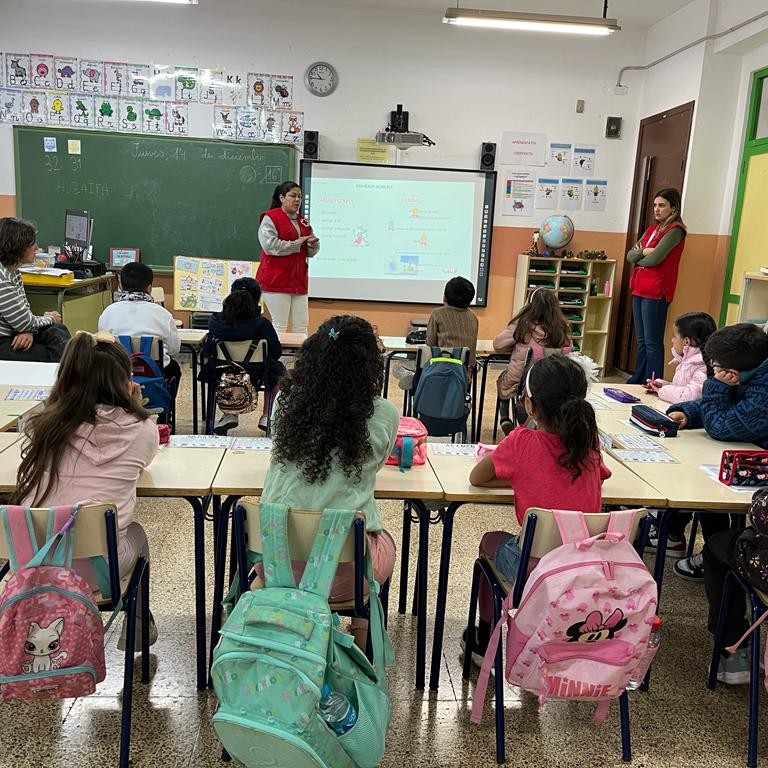
Photo credit Spanish Red Cross
They share what they learn with younger classmates and take those lessons home, turning schools into places where preparedness spreads naturally. As one teacher observed, "Acting in emergencies is complicated. But rehearsing gives children the confidence to act calmly."
What starts with a pillowcase becomes something much larger. Children feel more confident and less anxious when emergencies occur. Families become better prepared. Schools grow into hubs of local resilience, supported by volunteers and local authorities. And because the approach is simple and adaptable, it can travel—from one classroom to another, from one community to many.
This initiative is supported by the International Federation of Red Cross and Red Crescent Societies, Zurich Insurance Spain, and the Z Zurich Foundation, as part of the global Urban Climate Resilience Program.
If I was back in those shoes again, I’d tell myself to go speak to someone. Anyone. It doesn’t have to be a psychologist. Speak to friends. Speak to family. The very act of saying it out loud can often help you to make better sense of the way you’re feeling. It can help to give you the clarity to sort it out, or it can be the first step in doing so.
Zac Ward
Changing the game off the field
After the noise of the Olympics faded, Zac Ward, an international rugby star, found himself sitting with a question he had not expected: What comes next? Like many elite athletes, he had trained his body to perform under pressure, but it took that moment to recognize the toll it can take on the mind. Learning to name how he was feeling became a turning point, one that reshaped how he understood strength, success, and resilience.
Today, as an ambassador for the Tackle Your Feelings program in Australia, Zac uses his platform to help young people do what he once struggled to do: talk openly about mental wellbeing. By sharing his own experiences and supporting schools through the program, he helps break down stigma and give students practical tools they can carry into every part of life. What starts as a conversation in a classroom doesn’t end there; it changes how young people see themselves, ask for support, and look out for one another.
Impact forged by lived experience
As a child in Venezuela, Noris treasured discarded books that others had thrown away. They opened up a new world. Growing up amid poverty and instability, continuing her education meant navigating financial hardship, long journeys, and constant uncertainty. In university, studying sociology helped her understand her own life not as an exception, but as part of a wider social pattern of inequality and vulnerability. That insight changed what she chose to do next.
Today, Noris is a part of our Global Changemaker Program and was in our delegation to the 2025 One Young World Summit in Munich. She co‑founded Más Resilientes. She works with peers to support vulnerable youth, women, and transgender people through education. This initiative is helping young people from similar backgrounds enroll in university and believe in their ability to shape their futures.
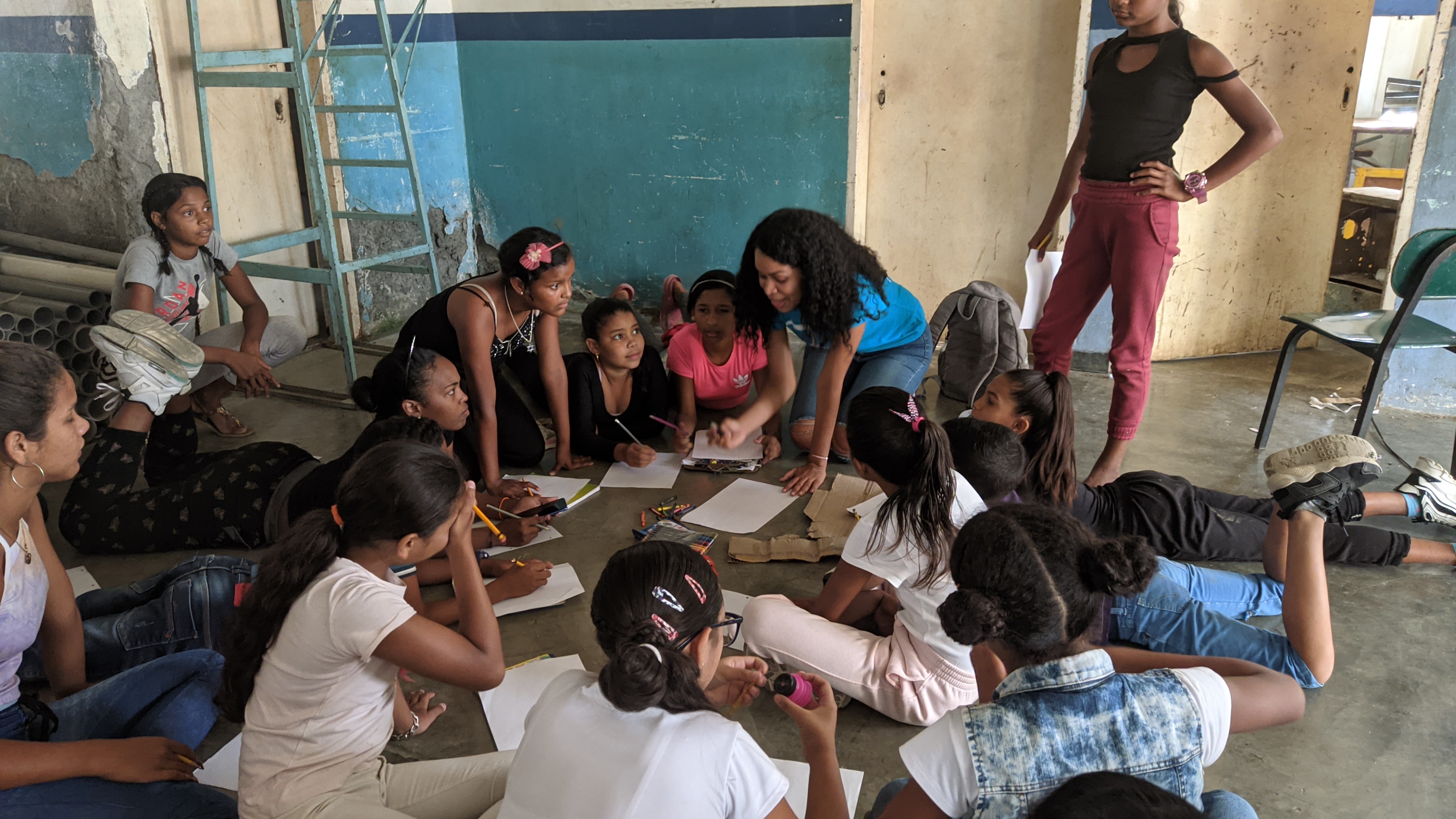
Photo credit Más Resilientes
Noris is focused on building the organization beyond herself, with a vision to expand across Latin America. Her story, no longer defined by limits – is now about breaking down barriers for others.